Small Home Office Ideas: A Japandi Desk Nook
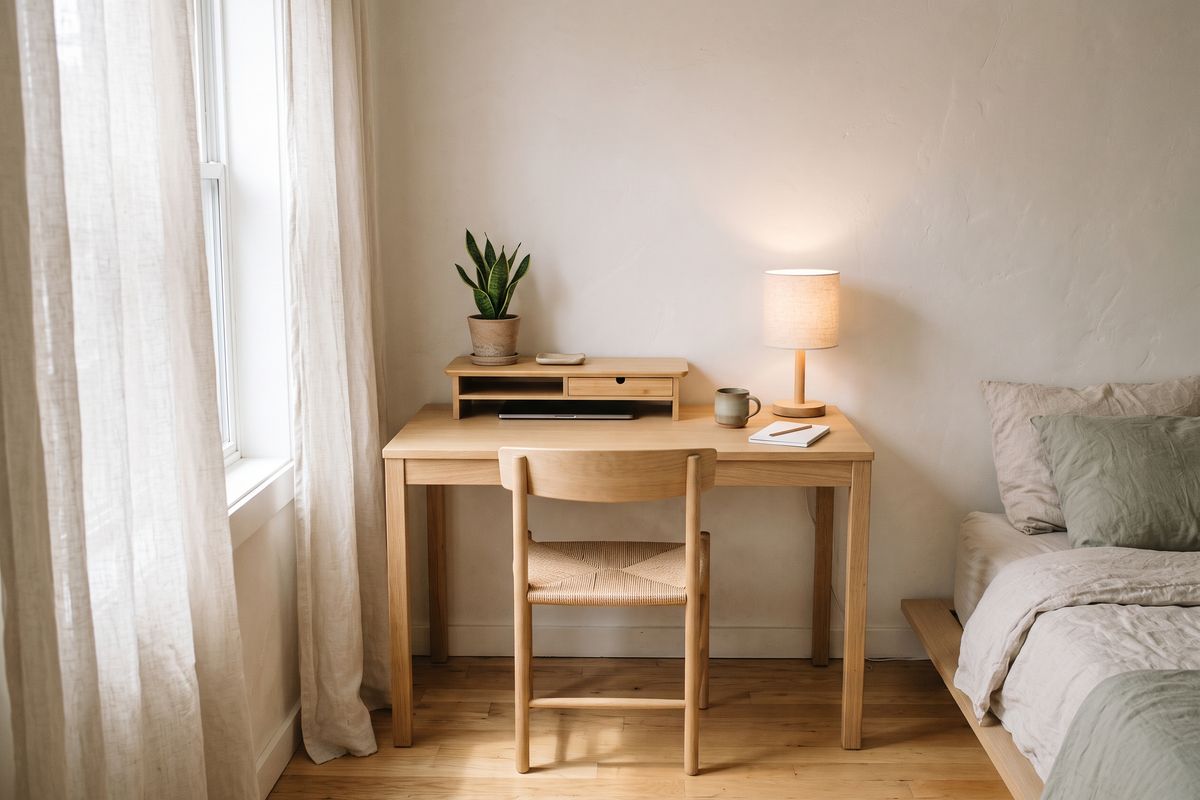
In a small apartment the office is usually a corner of the bedroom or the end of a studio. A Japandi desk nook keeps that corner calm: one plain wood desk, light from the side, one warm lamp and nothing on the desk that does not need to be there. When work ends, the corner should look like part of the room again.
Idea 1: A 40-inch desk, about 20 inches deep
For a laptop or one monitor, a desk about 40 inches (100 cm) wide and 20 to 24 inches (50 to 60 cm) deep is enough. Anything bigger fills the corner and collects paper. Choose a simple top in light wood or walnut on slim legs, with at most one small drawer, so the desk reads as a piece of furniture rather than an office.
Idea 2: Put the desk side-on to the window
Set the desk at a right angle to the window, not facing it and not with your back to it. Daylight then falls across the desktop from the side, there is no glare on the screen, and you are not looking at the bed while you work. If the only free wall faces the window, use a linen curtain to soften the light.
Idea 3: Leave room to push the chair back
Measure behind the chair before you buy the desk. A common rule of thumb is about 36 inches (90 cm) from the desk edge to the bed or wall behind you. With less, choose an armless wooden chair that slides fully under the desk, so the walkway stays clear when you are not working.
Idea 4: One warm lamp, not an office light
A bright white task lamp makes a bedroom feel like an office. Use one small lamp with a linen shade and a warm bulb, placed on the side away from your writing hand so your hand does not cast a shadow. In the evening it doubles as soft light for the room.
Idea 5: Lift the screen and give small things a drawer
A bamboo riser brings a monitor or laptop closer to eye level and frees the desktop underneath. Choose one with a drawer, and let it hold the pens, cables and chargers that would otherwise spread across the desk. Keep the top surface to the screen, the lamp and one object.
Idea 6: Hide every cable under the desk
Cables are what make a desk corner look messy from across the room. Fix a cable tray under the desktop, put the power strip and chargers in it and run one cord down the back leg to the wall. From the bed you should see wood and linen, not wires.
Idea 7: Close the office at night
When work ends, put the laptop in the drawer or on the riser shelf, push the chair in and turn off the screen. The desk becomes a side table with a lamp. For more ways to make one room do two jobs, see our studio apartment ideas.
How to Get the Look
- Measure the corner: a desk about 40 inches wide and 20 to 24 inches deep, with about 36 inches behind the chair.
- Place the desk side-on to the window.
- Choose an armless wooden chair that slides under the desk.
- Add one warm lamp with a linen shade on the side away from your writing hand.
- Lift the screen on a bamboo riser and keep small things in its drawer.
- Hide the power strip and cables in a tray under the desk.
Recommended Items
A few pieces that carry this look. Each link opens Amazon in a new tab, so you can compare sizes, colors and reviews.
Solid Wood Frame Writing Desk with Drawer (80, 100 or 120 cm)
Why it works: A plain desk with rubberwood legs, a wood-veneer top about 20 inches deep and a small drawer; the 100 cm size is close to the 40 inches a desk nook needs.
View on AmazonWooden Table Lamp with Linen Shade, 16 Inch
Why it works: A small wooden base with an open-top linen shade gives warm light on the desk and still looks like a bedside lamp when work is over.
View on AmazonBamboo Monitor Stand Riser with Drawer
Why it works: Natural bamboo lifts the screen closer to eye level, and the drawer underneath takes the pens and chargers that would otherwise spread across the desk.
View on AmazonUnder-Desk Cable Management Tray, 17 Inch, 2 Pack
Why it works: Two adhesive trays under the desktop hold the power strip and chargers, so no cables hang down where the room can see them; no screws needed.
View on AmazonAs an Amazon Associate, Quiet Japandi Home earns from qualifying purchases. This does not change the price you pay. Read our disclosure.
FAQ
What size desk fits a small bedroom?
A desk about 40 inches (100 cm) wide and 20 to 24 inches (50 to 60 cm) deep fits a laptop or one monitor, a lamp and a notebook. If you only use a laptop, 32 inches (80 cm) is enough.
How much space do you need behind a desk chair?
A common rule of thumb is about 36 inches (90 cm) from the desk edge to the bed or wall behind you, so you can push the chair back and stand up. With less, use an armless chair that slides fully under the desk.
Where should a desk go in a small bedroom?
Side-on to the window is usually best: daylight falls across the desk without glare on the screen, and you are not facing the bed while you work.