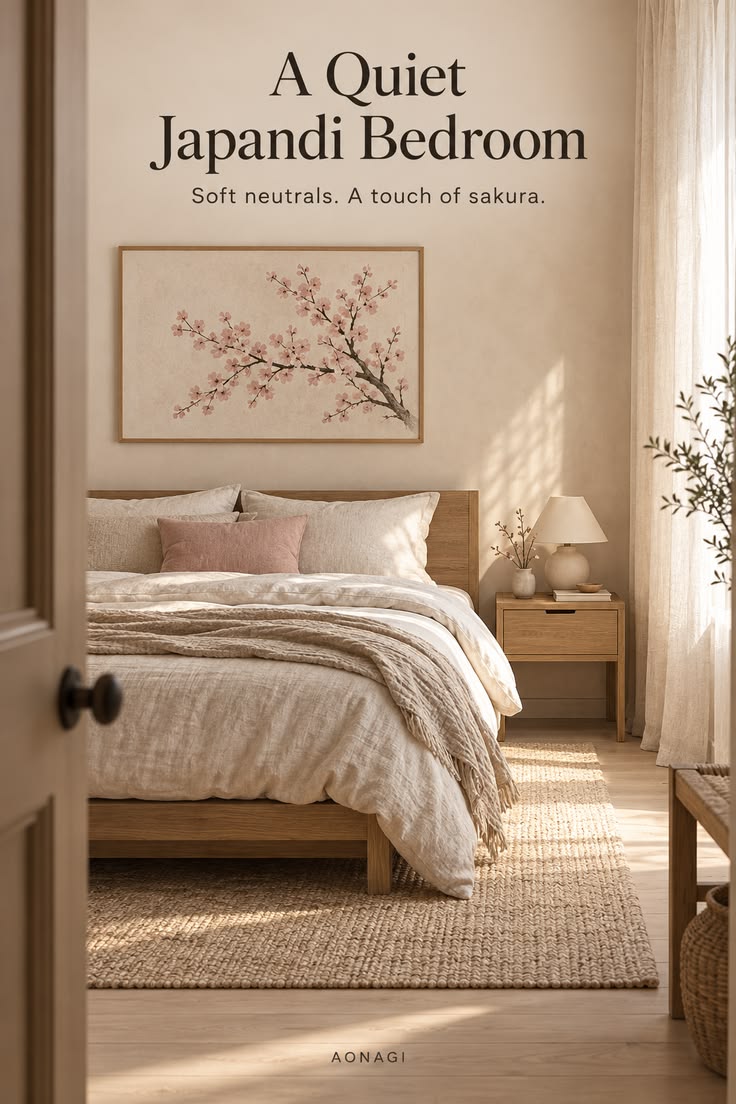
How to Create a Japandi Bedroom
Japandi is a way of editing a room as much as a way of decorating it. The finished bedroom has a low bed, natural materials, warm neutral color, soft light and very little else. Getting there is a sequence, and the order matters: decisions made early, such as the bed and the palette, decide everything after them.
Here are the seven steps in the order that avoids wasted purchases.
Step 1: Empty the room, then plan the layout
Take out everything that is not the bed and the mattress. Look at the empty room. Note where the window is, where the door swings and where the outlets are. A Japandi layout is simple: the bed against the longest uninterrupted wall, facing the door if possible, with clear walkways on at least one side and nothing blocking the window.
Decide now whether the room can hold a bench or chair, or whether the bed and two nightstands are the whole plan. Small rooms should stop at the bed, one nightstand and a rug.
Step 2: Choose the bed
The bed sets the height of the whole room. Choose a platform bed with a low profile, a slim or no headboard and no footboard, in solid wood or a plain upholstered frame in a natural fabric. Light oak or ash keeps the room airy; walnut or smoked oak gives it a dark anchor. If money is tight, lower the bed you have by removing the headboard and shortening the legs.
Step 3: Set the palette
Pick the wood tone first, then a warm white or pale greige for the walls that suits it. Add one deeper neutral for bedding or a throw, and one dark anchor: charcoal, black or walnut. Optional: one muted accent such as sage or clay, used in a single place. Write the palette down and take it shopping. Everything that comes into the room should fit one of those five slots.
Step 4: Bring in the materials
Japandi rooms are felt as much as seen. Aim for four or five natural textures:
- Linen for the bedding.
- Wool or jute for the rug.
- Wood for the bed and nightstand.
- Ceramic or stone for a lamp or a vase.
- Paper for a lampshade or a screen.
Avoid glossy surfaces, chrome, glass tables and synthetic velvet. Matte, natural, slightly imperfect finishes are what make the room feel calm.
Step 5: Layer the light
Replace bulbs with 2700K warm white and add three sources: a diffused pendant or dimmed ceiling light, a bedside lamp or sconce and one low light in a corner. Use paper or linen shades. Hang sheer linen curtains so daylight comes in soft. Turning off the overhead light in the evening should leave the room lit and warm.
Step 6: Add storage that hides
Everything that is not decor needs a home you cannot see: under-bed boxes, a nightstand drawer, a closed wardrobe. Open shelving invites clutter, so keep it to one small shelf at most. A wooden peg rail on the wall holds a robe or a bag without needing a chair to pile things on.
Step 7: Finish with one or two objects
Choose one object for the nightstand and one for the wall. A branch in a ceramic vase, a single framed ink drawing or a woven wall hanging, a small wooden bowl. Place them, step back and stop. The empty space around each object is what makes it read as chosen.
Live in the room for a week before adding anything else. If you still want a plant or a second cushion, add it then.
How to Get the Look
- Empty the room and settle the layout: bed on the longest wall, walkway clear.
- Buy or lower the bed: low, wood, no footboard.
- Write a five-slot palette: wall, bedding, wood, anchor, accent.
- Bring in linen, wool or jute, wood, ceramic and paper.
- Layer three warm lights and hang sheer curtains.
- Hide everything practical in drawers, boxes and a closed wardrobe.
- Place one object on the nightstand and one on the wall; wait a week before adding more.
Recommended Items
A few pieces that carry this look. Search for similar items by name, or use the links once they are live.
Low Walnut Platform Bed
Why it works: A dark, low bed becomes the room's anchor and lets walls, bedding and rug stay pale.
View ProductLink coming soonWashed Linen Bedding Set
Why it works: Linen is the material that most defines the Japandi bed: matte, textured and slightly rumpled.
View ProductLink coming soonFlat-Weave Wool Rug
Why it works: A wool flat-weave is softer underfoot than jute and still has the plain, natural look the style needs.
View ProductLink coming soonSolid Wood End-of-Bed Bench
Why it works: Gives the room a second horizontal line and a place for a folded throw or tomorrow's clothes.
View ProductLink coming soonProduct suggestions are editorial picks to help you get the look. This site currently does not earn commissions from any links. Read our disclosure.
FAQ
What is the difference between Japandi and Scandinavian bedrooms?
Scandinavian rooms lean lighter and cooler: white walls, pale birch, more pattern. Japandi adds Japanese influence: lower furniture, darker wood accents, warmer neutrals, fewer objects and more empty space.
How long does it take to make a Japandi bedroom?
The editing and lighting changes take a weekend. Replacing the bed and bedding depends on delivery. Most people complete the room in stages over a month, which also helps avoid buying things they do not need.
Can I have a TV in a Japandi bedroom?
It is better without one, but if you keep it, mount it flat on the wall opposite the bed, hide cables and avoid a media unit underneath. A small wood shelf or nothing at all keeps the wall calm.