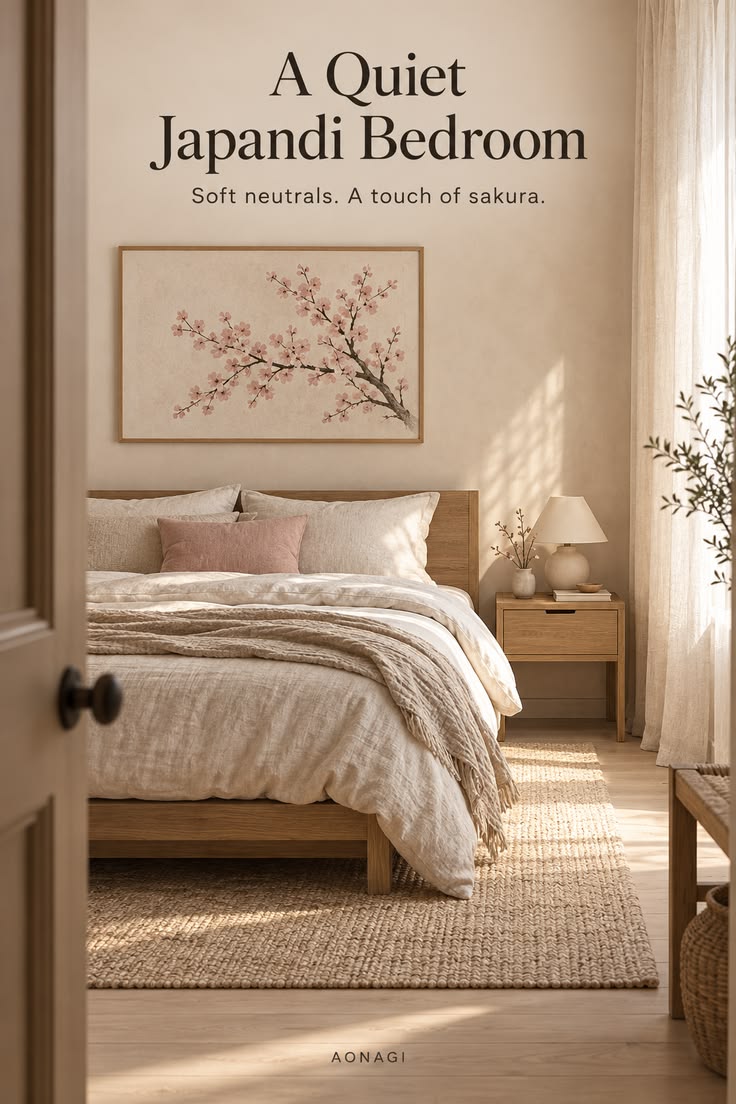
Japandi Bedroom Lighting Ideas
Lighting is the part of a Japandi bedroom that photographs least and matters most. A room with the right furniture and a single cool ceiling light will never feel calm. The same room with three warm, low sources and no overhead glare feels finished even before the decor goes in.
The ideas below cover temperature, shade materials, placement and the three-layer approach that makes the room work at every hour.
Idea 1: Warm bulbs everywhere, and dimmers where you can
Start with the bulbs. Every fixture in the room should be 2700K warm white. Mixed temperatures, such as a warm lamp next to a cool ceiling light, look worse than either one alone. Add a dimmer to the ceiling fixture or use dimmable bulbs in the lamps. An evening bedroom should sit at 20 to 40 percent brightness.
Idea 2: Paper and linen shades instead of glass and metal
Japandi light is diffused. A paper lantern, a washi-style shade or a linen drum spreads light across its whole surface, so you see a soft glowing shape rather than a bright bulb. Exposed bulbs, clear glass and polished metal shades create glare and hard shadows. If you love a bare-bulb fixture, use a large frosted globe bulb and keep it dimmed.
Idea 3: The three-layer rule
Give the room three sources at three heights:
- Overhead: a paper pendant or a flush fabric shade, dimmed, for general light.
- Bedside: a small lamp or wall sconce at roughly shoulder height when sitting up in bed.
- Low: a floor lamp, a lantern on a stool or a candle-height light in a corner.
Each layer covers a different moment: getting dressed, reading, winding down. Turning off the overhead and leaving only the two lower layers is the Japandi evening setting.
Idea 4: Move the reading light off the nightstand
In a small bedroom the nightstand may be 12 inches (30 cm) wide, and a lamp takes most of it. A plug-in wall sconce mounted 20 to 24 inches (50 to 60 cm) above the mattress, or a pendant hung on a long cord beside the bed, gives the same light and leaves the surface for a book and a cup. Run the cord straight down the wall or hide it behind the headboard.
Idea 5: Light the corner, not the center
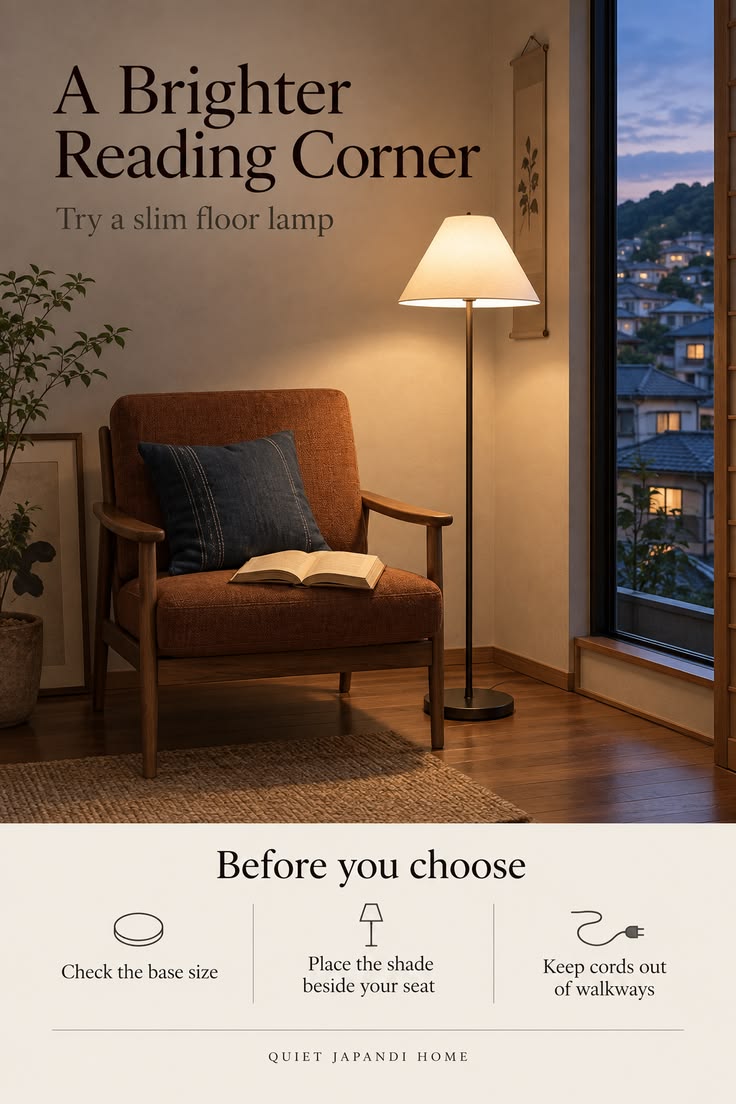
A single floor lamp in the corner farthest from the door makes a bedroom feel deeper and more layered than any ceiling fixture. Choose a lamp with a wood or matte black stem and a fabric shade, and keep the light low, around knee to hip height. This is the layer most rooms are missing.
Idea 6: Let daylight stay soft
Daytime light matters too. Sheer linen curtains or a paper-style roller shade filter sunlight into an even glow, which is the daytime version of a paper lantern. Layer a heavier linen or wool curtain on top if you need darkness for sleep. Both layers in warm neutrals keep the window from becoming a visual block.
Idea 7: Candles and lanterns for the last hour
A single candle in a ceramic holder, or a small battery lantern with a warm LED, gives the lowest possible light for the end of the day. Place it on the nightstand or a stool, away from textiles, and keep the holder simple: unglazed ceramic, wood or matte black.
How to Get the Look
- Replace every bulb with 2700K warm white; choose dimmable where possible.
- Swap glass or metal shades for paper or linen.
- Add a bedside sconce or hanging pendant to free the nightstand.
- Put a low floor lamp in the far corner.
- Hang sheer linen curtains, with a heavier layer if you need blackout.
- In the evening, turn off the overhead light and use only the lower layers.
Recommended Items
A few pieces that carry this look. Search for similar items by name, or use the links once they are live.
Round Paper Lantern Pendant
Why it works: Diffuses light through the whole shade, so there is no harsh point of light and the ceiling stays soft.
View ProductLink coming soonPlug-In Wall Sconce with Linen Shade
Why it works: Mounts beside the bed without an electrician and frees the entire nightstand surface.
View ProductLink coming soonDimmable Warm White LED Bulbs (2700K)
Why it works: Dimming is what makes a bedroom light usable at 10 pm. Fixed brightness always ends up too bright.
View ProductLink coming soonLow Wood Floor Lamp with Fabric Shade
Why it works: Light at knee height in a corner gives the room depth and a place for the eye to rest.
View ProductLink coming soonProduct suggestions are editorial picks to help you get the look. This site currently does not earn commissions from any links. Read our disclosure.
FAQ
What color temperature is best for a Japandi bedroom?
2700K for all lamps. It is warm without being orange. 3000K is acceptable for a reading light. Avoid anything 4000K or above; it turns wood grey and linen flat.
Do I need a ceiling light in a Japandi bedroom?
Not necessarily. Many Japandi bedrooms use only lamps and a sconce. If the ceiling fixture is fixed, put it on a dimmer and use a paper or fabric shade so it becomes a soft glow rather than the main light.
Are smart bulbs good for Japandi lighting?
They can be, if you keep them set to a warm white and use them mainly for dimming and schedules. Avoid color-changing effects; the point is a stable, warm, low light in the evening.