Best Colors for a Japandi Bedroom
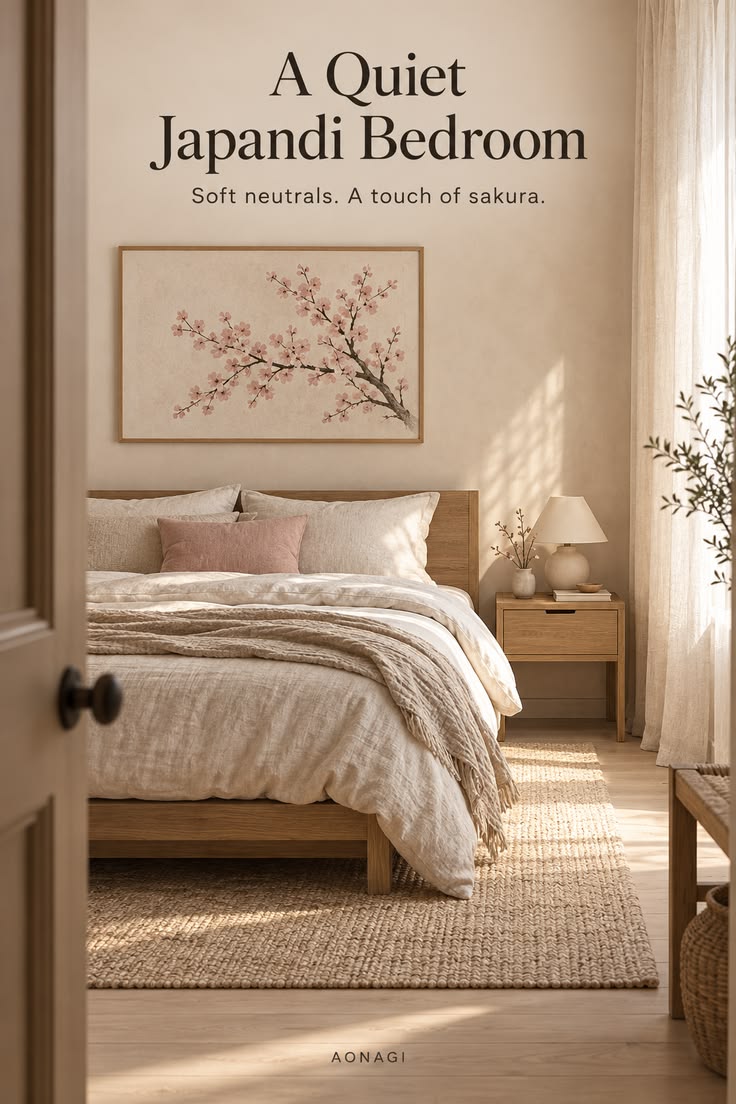
Japandi color is easy to describe and easy to get wrong. The palette is warm neutrals plus wood, with one darker anchor and, sometimes, one muted accent. The mistakes are usually temperature: a white that is too blue, a grey that is too cool or a wood that is too orange next to the rest.
Below are the colors that consistently work in bedrooms, grouped by where they go, followed by three complete palettes you can copy.
Idea 1: Walls in warm white or pale greige
The wall color is the background for everything, so it should be quiet and warm. Look for whites described as cream, ivory, chalk or linen, and greiges that lean beige rather than grey. In a north-facing room, go slightly warmer than you think; in a bright south-facing room, a chalkier white avoids looking yellow.
Test samples on two walls and look at them at night under warm bulbs. That is when a cold white shows itself.
Idea 2: Bedding in oatmeal, sand and warm white
Bedding should be a shade or two deeper than the walls so the bed reads as a soft shape rather than disappearing. Oatmeal, sand, flax and warm stone tones in linen are the standard. Layering two close shades, such as oatmeal sheets with a sand duvet, adds depth without pattern.
Avoid stark white sheets against warm white walls. The mismatch makes the walls look dirty.
Idea 3: One dark anchor
Every calm room needs one dark element or it feels unfinished. In a Japandi bedroom that is usually charcoal, espresso, dark walnut or black in a matte finish: a wool throw, a lamp base, a picture frame, a small stool or the bed frame itself. One or two dark pieces are enough. Spread them so the eye moves across the room.
Idea 4: Sage, olive and muted green
Green is the most natural accent for Japandi because it echoes plants and the outdoors. Choose greyed versions: sage, olive, eucalyptus. Use it in a pillowcase, a cushion, a ceramic vase or a single painted door. A live plant with soft leaves, such as an olive tree or a fern, does the same job.
Idea 5: Clay, terracotta and rust
Warm earth tones bridge wood and linen. A clay lamp, a rust linen cushion or a terracotta pot adds warmth that feels grounded rather than bright. Keep to one piece; two or more starts to look Mediterranean instead of Japandi.
Idea 6: Indigo and ink blue in small doses
Japanese textiles give Japandi its blue: indigo cushion covers, a boro-style throw, a small ink painting. Deep blue works with both light oak and dark walnut and looks best against warm white walls. Because it is strong, use it in one place only.
Idea 7: Match the palette to the wood
Wood is a color too. Pair light woods (white oak, ash, birch) with chalky whites and pale greige, and use charcoal for the anchor. Pair dark woods (walnut, smoked oak) with warmer creams and oatmeal, and let the wood itself be the anchor. Mixing a cool white with orange-toned wood such as cherry or honey pine is the most common clash; if the wood is warm, the white must be too.
Three palettes to copy
Soft and airy: chalk white walls, oatmeal linen bedding, white oak bed and nightstand, charcoal wool throw, one sage cushion.
Warm and grounded: pale greige walls, sand linen bedding, walnut bed, clay ceramic lamp, black picture frame with an ink drawing.
Dark and cocooning: warm charcoal walls, warm white linen bedding, light ash bed, jute rug, a single indigo cushion.
How to Get the Look
- Pick the wood first: light or dark. It decides how warm the whites need to be.
- Choose a warm white or pale greige for the walls and test it at night.
- Dress the bed in linen one or two shades deeper than the wall.
- Add one dark anchor: a throw, a lamp base or a frame in charcoal or walnut.
- Add one muted accent color in one or two places, and no more.
- Check the room in daylight and lamplight; adjust the accent, not the base.
Recommended Items
A few pieces that carry this look. Search for similar items by name, or use the links once they are live.
Warm White Interior Paint Sample Set
Why it works: Testing three warm whites on your actual wall, in your actual light, is the only way to avoid a white that turns cold or yellow.
View ProductLink coming soonCharcoal Wool Throw Blanket
Why it works: One dark, matte textile at the foot of the bed anchors a pale room so it does not float away.
View ProductLink coming soonSage Green Linen Pillowcases
Why it works: A muted green in a small dose adds life to a neutral bedroom without breaking the calm.
View ProductLink coming soonClay-Colored Ceramic Table Lamp
Why it works: Terracotta and clay tones bring warmth that sits naturally between wood and linen.
View ProductLink coming soonProduct suggestions are editorial picks to help you get the look. This site currently does not earn commissions from any links. Read our disclosure.
FAQ
Should Japandi bedroom walls be white or beige?
Either, as long as it is warm. A white with a cream or grey base, or a pale greige, both work. Avoid bright, blue-based whites and cool greys; they fight with wood and linen.
Can I paint a Japandi bedroom a dark color?
Yes. A deep charcoal, warm brown or dark olive on all four walls makes a small bedroom feel enclosed and restful. Keep bedding pale and wood light so the room does not become heavy.
What accent colors go with Japandi?
Muted, earthy versions of a color: sage instead of bright green, clay instead of orange, indigo instead of royal blue, mushroom instead of beige. Use one accent, in one or two places.