Japandi Living Room Ideas
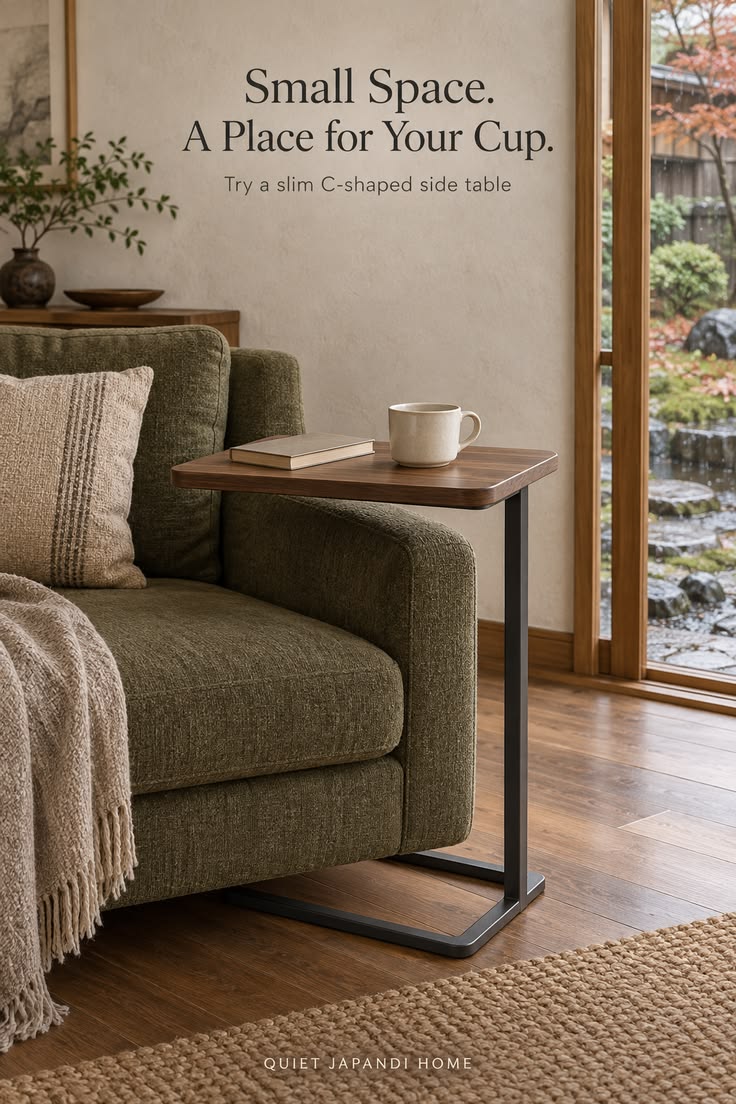
A Japandi living room is low, warm and mostly empty. Seating sits close to the floor, the materials are wood, linen, wool and stone, the light comes from lamps rather than the ceiling and there is one thing on the wall. Because the living room is where most of a home’s objects collect, the hardest part is the editing, not the furniture.
These ideas cover the pieces, the layout and the finishing touches, in the order you would build the room.
Idea 1: Choose a low sofa in a natural fabric
The sofa decides the height of everything else. Look for a low back, a deep seat, slim wooden legs or a plinth base, and upholstery in linen, cotton or wool. Oatmeal, sand and warm grey keep the room light; charcoal makes the sofa the anchor. A sofa with loose back cushions looks more relaxed than tight upholstery.
If the room is small, a two-seat sofa plus a wooden armchair or a floor cushion is better than a large sectional.
Idea 2: A round or low wood coffee table
A round oak or ash coffee table, or a low rectangular one in walnut, sits at or slightly below the sofa seat. Round tables soften the room and are easier to move around; a low slab in dark wood adds weight. A stone or ceramic side table next to the sofa gives a second material. Keep the table top to one tray, one bowl or one book.
Idea 3: One large rug under all the seating
A rug that only touches the coffee table makes the room look like furniture floating in a pool. Size the rug so the front legs of the sofa and any chairs sit on it. Wool flat-weave in a natural undyed tone, or a thick jute for a rougher feel. In a large room, one big rug is still better than two small ones.
Idea 4: Light from three places, none of them the ceiling
Leave the overhead light off in the evening. Use a tall paper floor lamp beside the sofa, a small ceramic table lamp on a side table or console and a low light in a far corner such as a lantern on a stool. All bulbs 2700K warm white. During the day, sheer linen curtains turn the window into a soft light source.
Idea 5: Closed storage, and only one open shelf
Living rooms accumulate remotes, cables, games and paper. Give them a low wood sideboard or console with plain doors and no visible handles. Limit open shelving to a single shelf or a low bookcase with only a few objects and books, spines arranged by tone. The rule is that anything practical is behind a door.
Idea 6: One wall moment
Choose one wall, usually the one you see from the sofa, and give it a single large piece: a big framed ink drawing, a woven wall hanging, a single shelf with one ceramic, or a large plant beside it. Leave the other walls empty. A gallery wall is the opposite of Japandi.
Idea 7: A plant or branch with a strong shape
One plant with a clear silhouette does more than several small ones: an olive tree in a clay pot, a tall branch in a floor vase, a bonsai-style ficus on a stool. Place it where the light falls, near the window or in the corner the floor lamp lights, so it becomes part of the room’s structure.
Layouts for common rooms
Open-plan living area: float the sofa with its back to the kitchen or dining zone, rug under all seating, console behind the sofa to mark the boundary.
Narrow living room: sofa along the long wall, round coffee table, one armchair at the end near the window, TV on the opposite long wall. Keep the walkway clear from door to window.
Small apartment living room: two-seat sofa, a stool instead of a coffee table, one floor lamp, one plant. Nothing else on the floor.
How to Get the Look
- Pick a low sofa in linen or wool; decide whether it is pale or the room’s dark anchor.
- Add a round or low wood coffee table and one stone or ceramic side table.
- Put down one rug large enough for all seating to sit on.
- Add a paper floor lamp, a small table lamp and a low corner light; leave the ceiling light off.
- Move everything practical into a closed sideboard.
- Hang or lean one large piece on one wall; leave the rest empty.
- Place one plant or branch with a strong shape where the light falls.
Recommended Items
A few pieces that carry this look. Search for similar items by name, or use the links once they are live.
Low-Profile Linen Sofa
Why it works: A sofa with a low back and short legs keeps sightlines open and matches the low furniture the rest of the room is built on.
View ProductLink coming soonRound Solid Oak Coffee Table
Why it works: A round table softens a room of straight lines and is easier to walk around in a tight layout.
View ProductLink coming soonLarge Wool Flat-Weave Rug
Why it works: One rug big enough to sit under all the seating pulls the room together and adds warmth underfoot.
View ProductLink coming soonPaper Floor Lamp
Why it works: A tall paper lamp gives soft, diffused evening light and reads as sculpture when it is off.
View ProductLink coming soonProduct suggestions are editorial picks to help you get the look. This site currently does not earn commissions from any links. Read our disclosure.
FAQ
What sofa works in a Japandi living room?
A low-backed sofa with slim wood or short legs, upholstered in linen, cotton or wool in oatmeal, sand, warm grey or charcoal. Avoid tufting, rolled arms, leather with a shine and anything overstuffed.
How do I keep a Japandi living room from feeling bare?
Use layers of texture instead of objects: a wool rug over a wood floor, linen cushions on a linen sofa, a wood table with a ceramic bowl, a paper lamp. Add one plant with a strong shape. Texture fills a room without cluttering it.
Can I have a TV in a Japandi living room?
Yes. Mount it on the wall or place it on a low wood console with closed doors, hide the cables and keep the wall around it empty. A frame-style TV that shows art when off fits the style well.